

This article is presented in collaboration with beSUCCESS, supporting the National IT Industry Promotion Agency (NIPA) of South Korea’s initiatives to help startups expand into the Japanese market. The featured startup participated in Japan IT Week Autumn 2025 (October 22-24, 2025, Makuhari Messe) as part of the KOREA NIPA Pavilion.
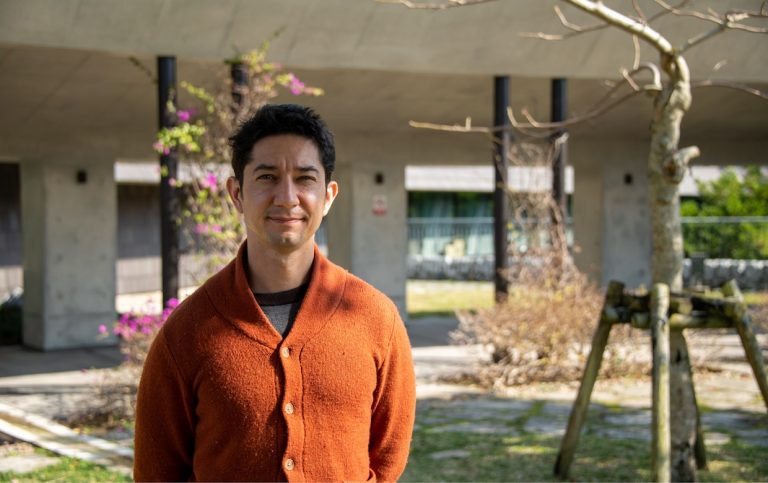
In January 2025, Korean research tech company Opensurvey launched its full-scale entry into the Japanese market. Armed with 13 years of accumulated expertise as a research specialist and its AI-powered SaaS platform Dataspace, the company is proposing a transformation of Japanese corporate decision-making processes themselves. Kyumin Lee (이규민) – pictured above, who oversees Japanese operations, travels from Seoul to Tokyo every month, investing in building trust through face-to-face relationships. This isn’t about short-term revenue—it’s about market development with a 10 to 20-year horizon.
In Korea, over 130 companies have already adopted Dataspace, dramatically improving the speed of decision-making at major enterprises. But Lee’s choice of Japan wasn’t just about market size. It’s a mature market with the world’s most discerning consumers, where companies take customer understanding seriously. Most importantly, success in Japan provides powerful credentials for global expansion. The company understands the value of being recognized in the most demanding market.
Dataspace has established a unique positioning between SurveyMonkey’s ease of use and Qualtrics’ advanced analytical capabilities. From dependence on outsourced research agencies to rapid customer understanding by companies themselves—this article explores the Japanese market strategy of this Korean research SaaS through an interview with Lee.
From Re-founding to Global Expansion: A 13-Year Evolution

Photo credit: Opensurvey
Opensurvey’s history cannot be told through a simple growth curve. The company was established in 2011 under the name “IDINCU,” but there was a dramatic turning point before it reached its current form.
Lee reflects that 2016 was the company’s true re-founding. Current CEO and co-founder Hee-young Hwang (황희영) was originally an Opensurvey client. Working as a consultant at McKinsey from 2013 to 2015, she used Opensurvey’s services as a customer, as an expert in strategic planning and data analysis.
Through her consulting work, Hwang became acutely aware that quality data and insights were essential for companies to make correct decisions. In that process, she used Opensurvey’s services and recognized their potential. However, she also understood there was significant room for improvement. It was around this time that the current COO, one of the founding members, approached Hwang about joining Opensurvey.
The two of them essentially re-founded Opensurvey. They fundamentally revisited and refined the business strategy. (Lee)
In 2018, they changed the company name to Opensurvey. In fact, Opensurvey was the name of the company’s web platform, but they made it the company name because this platform was so central to the company’s identity.
After this re-founding, the company recorded an impressive annual growth rate of 30%. However, the driving force wasn’t simply about manpower—it was built on a foundation of deep expertise cultivated from the company’s earliest days.
The company’s current COO, Kyungrim Song (송경림), a core member from the onset, brings deep expertise in B2B/Tech Global Sales and Operations, honed during her career at Samsung Electronics and Google across Korea, Singapore, and New York. Meanwhile, Hwang accumulated extensive experience in data analysis and strategic consulting at McKinsey.
This powerful combination—research and data expertise paired with global sales and operational excellence—has become the company’s defining strength.
In 2020, Opensurvey achieved profitability for the first time since its founding. In 2024, it recorded annual sales of 15.8 billion won (approximately $12 million), with operating profit margin increasing by 9 percentage points year-over-year—strong performance.
Between 2020 and 2021, the company made an important decision. Rather than pursuing short-term profits, they prioritized investment in the future. They allocated significant resources to developing new products, particularly building Dataspace. As a result, they temporarily fell into the red, but it was a planned investment. That investment bore fruit in December 2023. Just 10 months after Dataspace’s official launch, they achieved ARR (Annual Recurring Revenue) of 1 billion won (approximately $750,000). Lee shows confidence that these numbers prove the company’s strategy was correct.
Why the Japanese Market as The First Step for Global
Regarding why they chose Japan as the first step in global expansion, Lee speaks clearly.
First, market size. While Japan’s GDP is approximately 2.5 times larger than Korea’s, the market sizes for advertising SaaS and the research industry are approximately six times bigger. Simply put, our business opportunity in these specific sectors is six times larger than in Korea. But that’s only the superficial reason.
Second, and this is most important, Japan is one of the world’s most mature markets. Japanese consumers are extremely sophisticated, and their expectations of companies are exceptionally high. Product quality, service quality, brand consistency—high levels are demanded across all aspects. This creates significant pressure for companies. But at the same time, for research tools like ours, it’s also a tremendous opportunity.
The third reason is that success in Japan becomes powerful proof for our global expansion. Japan is one of the world’s most demanding markets. If we’re recognized here, expansion into other markets becomes much smoother. The track record of being ‘a service that succeeded in Japan’ significantly enhances credibility in global markets. (Lee)
Indeed, the characteristics of the Japanese market align perfectly with Dataspace’s strengths. Japanese companies have a culture of valuing detailed, accurate data and making careful decisions based on that data. Dataspace is precisely the tool to meet those needs. Lee explains that while it has advanced analytical capabilities, it’s also easy to use. It can provide both the “accuracy” and “efficiency” that Japanese companies demand.
Geographic and cultural proximity is also one reason for choosing Japan. Korea and Japan share many commonalities in business culture: commitment to quality, attention to detail, emphasis on long-term relationships—these are values common to both countries. That’s why Opensurvey is confident it can deeply understand and adapt to the Japanese market.
However, Lee is fully aware of the challenges of the Japanese market. Japan is said to be a market that’s “hard to enter, hard to exit.” While market entry is difficult, once accepted, you can build long-term, stable relationships. The company is committed to the Japanese market with that long-term perspective.
SK IntelliX’s Success, Dataspace’s Distinctiveness
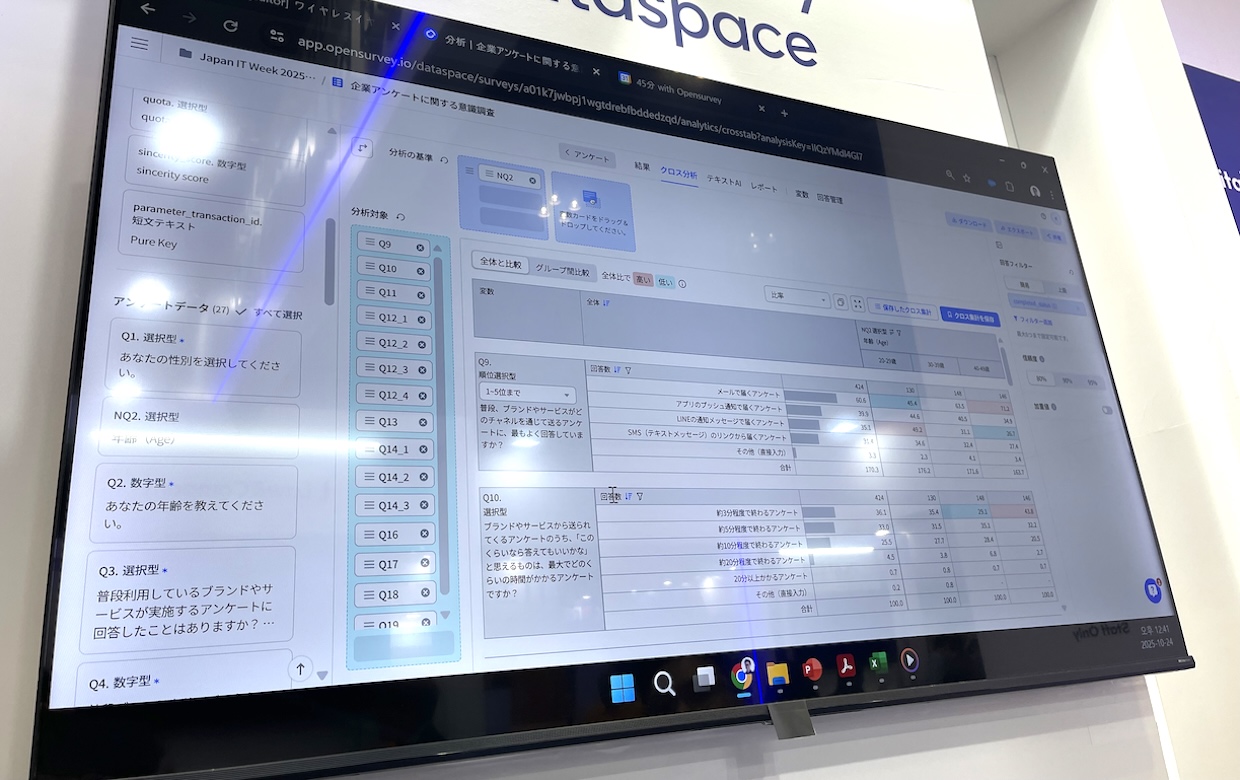
The case studies from Korea speak most eloquently to Dataspace’s capabilities. Among them, the SK IntelliX case is emblematic.
SK IntelliX is a major Korean rental company that specializes in AI-powered wellness home appliances. They wanted to enhance customer satisfaction and strengthen data-driven decision-making to secure competitive advantage in the market. However, with conventional methods, the entire process—from survey design to implementation, analysis, and report creation—took approximately two months.
Two months is fatally long in terms of modern business speed. During that time, the market environment changes, competitors make their moves, and customer needs shift. There was always the risk of missing the timing for decision-making.
After introducing Dataspace, the situation changed dramatically. The same process could now be completed in just five days. This wasn’t simply about time reduction. The entire decision-making cycle changed. Surveys that could only be conducted once a month could now be executed once a week, sometimes multiple times. This enabled SK IntelliX to respond to market changes in real-time.
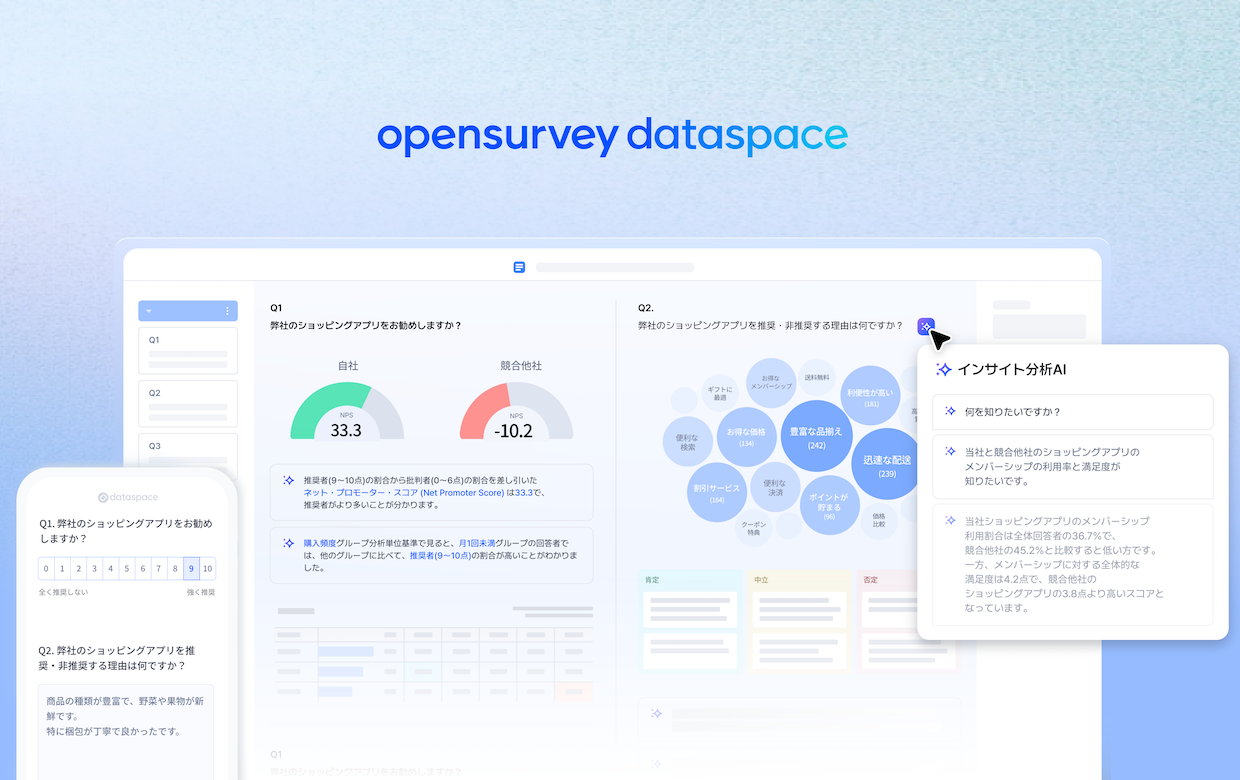
Making this efficiency possible is Dataspace’s AI functionality. The company’s AI isn’t just an auxiliary tool. AI is integrated into every process, from questionnaire design to data collection, analysis, and insight extraction.
Specifically, this includes AI-powered survey design assistance, automated text analysis, sentiment analysis, topic analysis, and automatic translation functions.
For example, consider the task of analyzing hundreds or thousands of open-ended responses, not multiple-choice answers. Traditionally, researchers had to read each one, categorize them, and identify trends. This required enormous time and expertise. But with Dataspace’s text analysis AI, this work is completed in minutes. Moreover, it can discover subtle patterns and hidden insights that humans might miss. (Lee)
The research tool market already has powerful players like SurveyMonkey and Qualtrics. Opensurvey’s differentiation strategy is clear.
SurveyMonkey is very user-friendly and ideal for small-scale surveys. However, there are aspects where it cannot fully accommodate advanced analytical functions or enterprise-level requirements. On the other hand, Qualtrics is extremely powerful and can meet the complex needs of large enterprises. However, accordingly, implementation costs are high, and expertise is needed to master it.
Dataspace is positioned between these two. It balances SurveyMonkey’s ease of use with Qualtrics’ advanced functionality. While priced accessibly for small and medium enterprises, it has analytical capabilities that can meet the demands of large corporations. This is the company’s greatest differentiation point.
Furthermore, a strength of Dataspace is that 13 years of knowledge as a research specialist is built into the product. For example, the survey design assistance function is based on best practices learned from thousands of projects. The AI functionality is also designed to mimic researchers’ thought processes.
Launched in December 2023, Dataspace is steadily building a track record in the Korean market as a B2B SaaS specialized in research and customer experience analysis. Currently, over 130 companies use Dataspace, and many report experiencing improvements in both the speed and quality of decision-making. This is why the company is confident it can succeed in the Japanese market as well.
First-Year Challenge: Aiming for 1,000 Leads in Japan
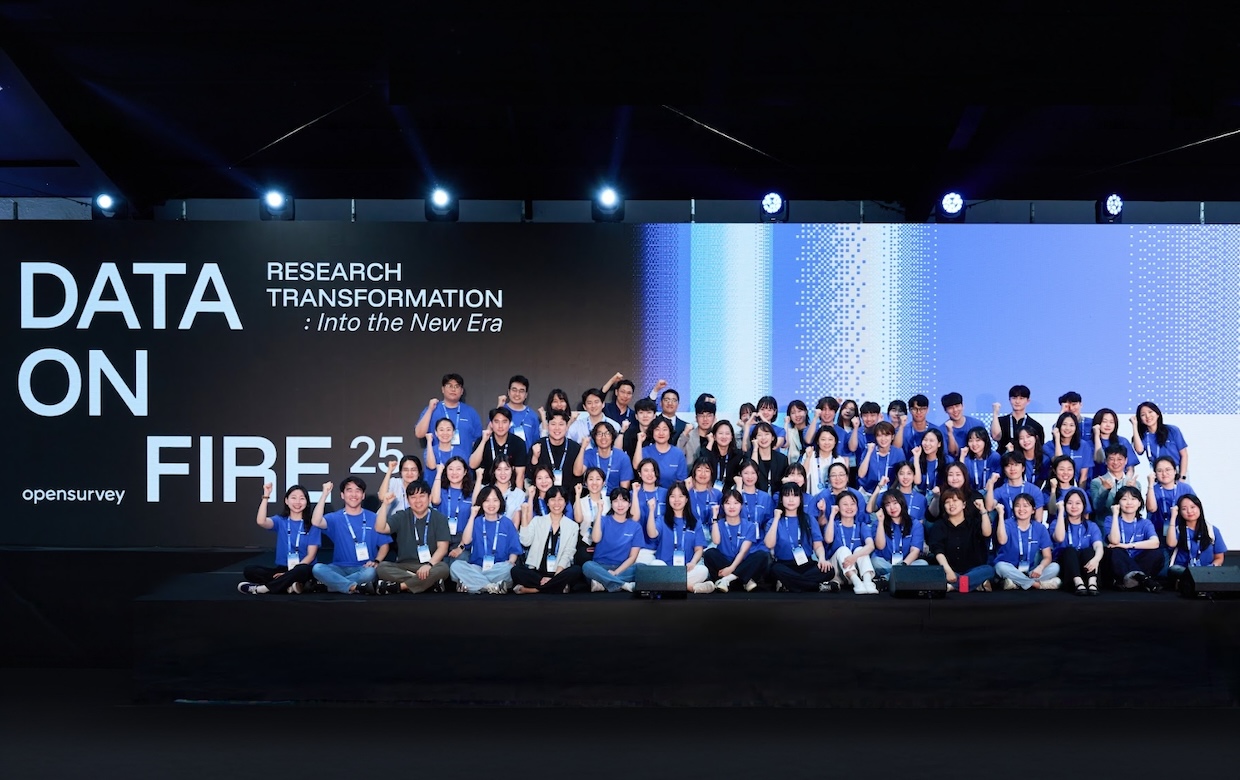
Photo credit: Opensurvey
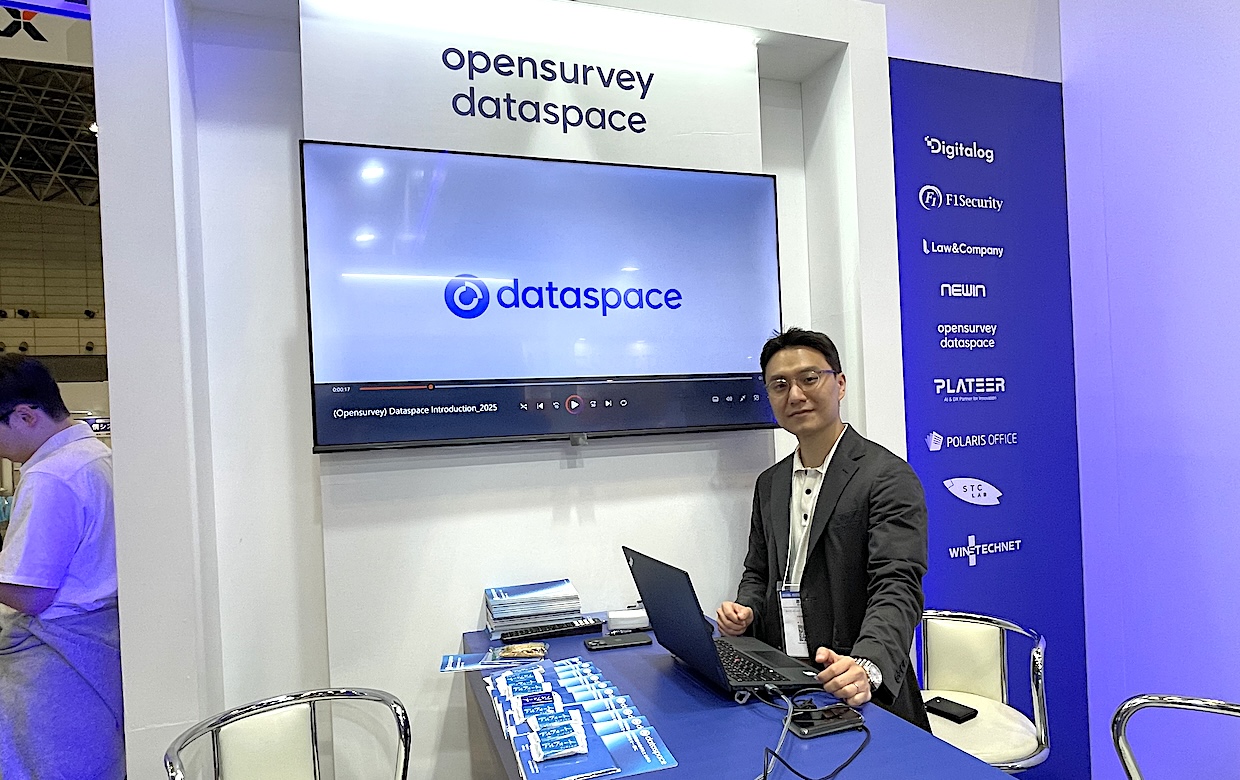
The challenge in the Japanese market has already begun. In April 2025, they exhibited at Japan IT Week Spring, with practitioners from various industries including finance, electronics, and corporate consulting visiting their booth.
Japan IT Week was an important milestone for Opensurvey. From day one, more visitors than expected came to the booth. They were able to feel firsthand the high level of interest in their service. In particular, the AI-powered text analysis functionality and the dashboard optimized for customer experience analysis received high praise.
But what is the biggest challenge in the Japanese market? Lee’s answer comes immediately—gaining trust.
Japanese companies are very cautious about new services and vendors. This is not meant negatively at all. Rather, Lee understands it as an expression of responsibility. Japanese companies are committed to always providing the highest quality service to their customers and business partners. That’s precisely why they’re extremely careful in selecting the tools and partners they use.
This caution is particularly pronounced with services that handle data. Customer data is one of a company’s most important assets. Using external tools to handle that data is a major decision for companies. Especially when it’s a service from a Korean company, Lee thinks it’s natural to be even more cautious.
Opensurvey is tackling this challenge head-on. First, the company has obtained ISMS-P certification. This was the first acquisition among Korean research-related companies. It’s proof that they’ve cleared strict standards in both information security and personal information protection.
Furthermore, they’ve implemented additional measures for the Japanese market. In October 2025, the company became the first in the research industry to simultaneously obtain both ISO/IEC 27001 (Information Security Management) and ISO/IEC 27701 (Privacy Information Management) certifications, demonstrating their commitment to international security standards. They’re fully compliant with Japan’s Personal Information Protection Act and GDPR. Data storage location, access rights, encryption, backups—they ensure the highest level of security in all aspects. And they’re completely transparent about these details with customers.
Another key to building trust is face-to-face communication. Lee comes from Seoul to Tokyo every month. While online meetings are convenient, he believes face-to-face dialogue is essential, especially in the early stages. By meeting in person, people can directly feel the company’s sincerity and passion for the product. And he can more deeply understand customer concerns and requests.
Regarding the goals for 2026, Lee has a clear vision. The first-year goal is to acquire 1,000 leads. This is by no means an easy number, but he’s confident it’s achievable.
The strategy to achieve this goal is multi-layered. First, they’re strengthening marketing activities. Through every channel—event exhibitions like Japan IT Week, web marketing, content marketing—they’ll communicate the value of Dataspace.
Next is collaboration with local partners. There are limits to Opensurvey developing the Japanese market alone. That’s why they’re actively building partnerships with Japanese consulting firms, system integrators, and marketing agencies. They deeply understand the Japanese market and have customer networks that Opensurvey doesn’t. Through this collaboration, they can reach the market more effectively.
In fact, several collaborative relationships have already begun to move. Through cooperation with companies specializing in localization and SEO, they’re strengthening information dissemination in Japanese. They’re also in discussions with multiple consulting firms, considering introducing Dataspace to their clients.
And most importantly, Lee emphasizes, is the success of existing customers. The company has already acquired its first customer in Japan. It’s a major company engaged in smart city-related business, an area with high needs for customer understanding and experience analysis. While he can’t reveal details, Lee feels encouraged. If this customer relationship succeeds, it will be the best weapon for acquiring the next customers. In Japan, other companies’ success stories are highly valued. That’s why Opensurvey is putting all its effort into the success of its first customer.
Outlook for 2026 and Beyond: Expansion into the Asia-Pacific Region
Success in Japan is an important step in Opensurvey’s global expansion, but not the final goal. After building a track record in Japan, the company plans to expand into other Asia-Pacific regions.
Specifically, they have Singapore, Australia, and major Southeast Asian markets in their sights. These markets each have different characteristics. Singapore is Asia’s business hub, where multinational companies’ regional headquarters are concentrated. Australia is a mature English-speaking market with many companies having advanced analytical needs. Southeast Asia is a rapidly growing market where digitalization is accelerating.
However, before entering these markets, success in Japan is essential. Services recognized in Japan have high credibility throughout the Asia-Pacific region. The track record of having “cleared Japan’s strict standards” will significantly accelerate expansion into other markets.
In global expansion, Opensurvey is also focusing on product localization. Language support is of course important, but Lee points out that’s not sufficient. Products need to be customized according to each market’s culture, business practices, and regulatory environment. For example, for Japan, they added reporting functionality compatible with Japan-specific business document formats. Such detailed considerations are actually extremely important.
Technical evolution also continues. The company is investing in further strengthening AI functionality. In addition to current text analysis, sentiment analysis, and topic analysis, they’re developing predictive analytics and recommendation functions. Eventually, they plan to be able to suggest to companies “what kind of research should be conducted next” by learning from past data.
Additionally, Dataspace is expanding into the customer experience (CX) management domain. Research and CX are closely related. For companies to understand customers and improve their experience, continuous data collection and analysis are necessary. Dataspace is evolving to function not just as a one-time survey tool, but as a continuous CX management platform.
In June 2025, they established a free plan for Dataspace, making basic services available to anyone at no cost. This is a strategy to have more companies try Dataspace. Especially for small and medium enterprises and startups, the initial investment hurdle is high. They have customers experience the value with the free plan, then transition to paid plans as their business grows—this freemium model is a proven strategy in the SaaS industry.
On the hiring front, Opensurvey is also strengthening its commitment to the Japanese market. Currently, the Korean team supports the Japanese market, but they plan to build a dedicated team in Japan in the future. Sales, customer success, marketing—they’ll hire talent with deep understanding of the Japanese market in each field and build a more detailed support structure.
In 10 or 20 years, Opensurvey will be used as a matter of course in the Japanese business scene—that’s the future we envision. Listening to customer voices and making decisions based on data will become not something special, but routine behavior for all companies. And Dataspace will be chosen as the tool supporting that realization. That’s our goal. (Lee)
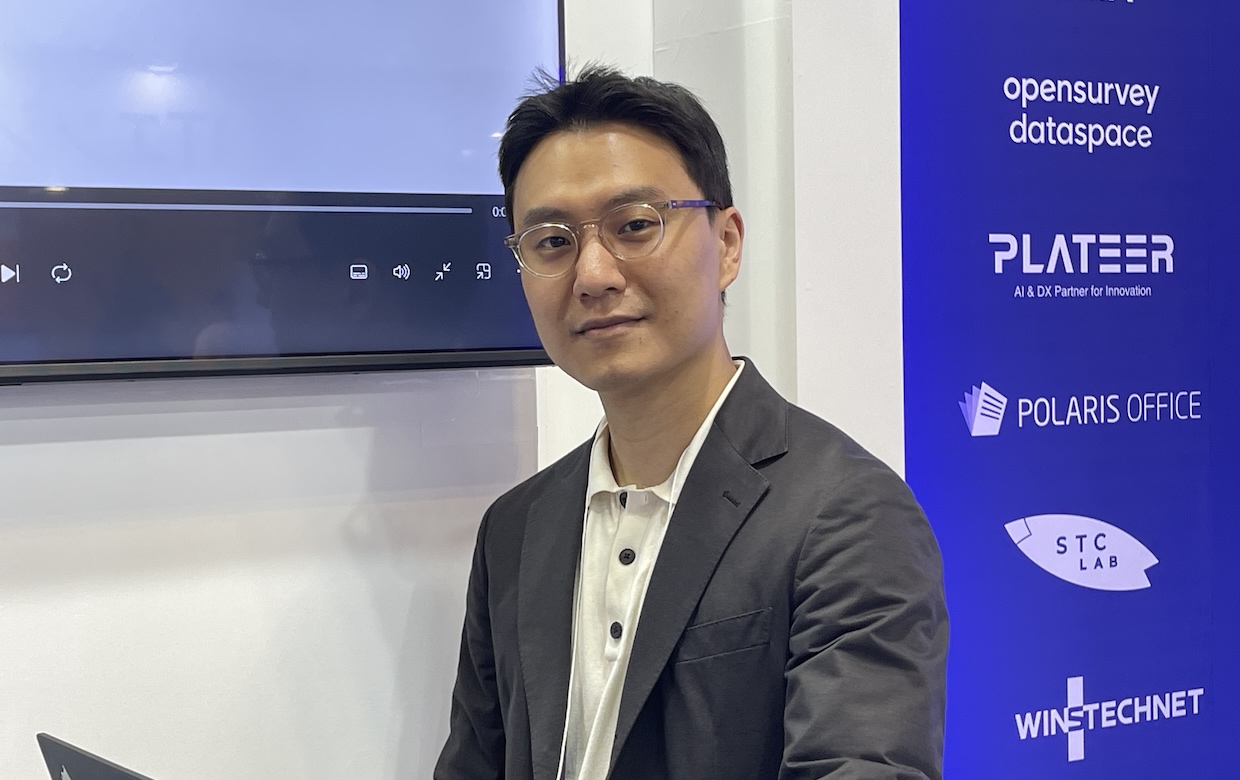
Photo credit: Growthstock Pulse
At the end of the interview, Lee spoke once more about his feelings toward the Japanese market.
I understand that gaining trust takes time. But we have the expertise we’ve cultivated over 13 years. And above all, we have a strong desire to support our customers’ success. (Lee)
Every month, from Seoul to Tokyo. Building relationships one company at a time through face-to-face dialogue. This steady approach might seem inefficient if judged purely by efficiency. But for Lee, it’s an essential condition for success in the Japanese market. Even in an era where online meetings are mainstream, Lee believes the trust born from meeting face-to-face is irreplaceable.
Entry into the Japanese market is not simply business expansion for Opensurvey—it’s an important litmus test in their evolution into a global company. Services recognized in Japan gain credibility throughout the Asia-Pacific region. Conversely, failure in Japan makes subsequent expansion difficult. That’s why the company is carefully yet surely establishing its foothold in the Japanese market.
What Lee envisions is the future 10, 20 years from now. The day when Opensurvey is used as a matter of course in the Japanese business scene—until that day comes, the company’s challenge continues. The first 1,000 leads acquired, the first 5 success stories, and the first 100 company adoptions. While steadily clearing each milestone one by one, the company will put down roots in the Japanese market.
The day when this Korean research SaaS brings new winds to Japanese corporate culture may not be so far away. A future where data-driven decision-making becomes commonplace not just for some advanced companies, but for all companies. Opensurvey is moving forward step by step toward that realization. Kyumin Lee’s challenge has only just begun.


 Growthstock Pulse