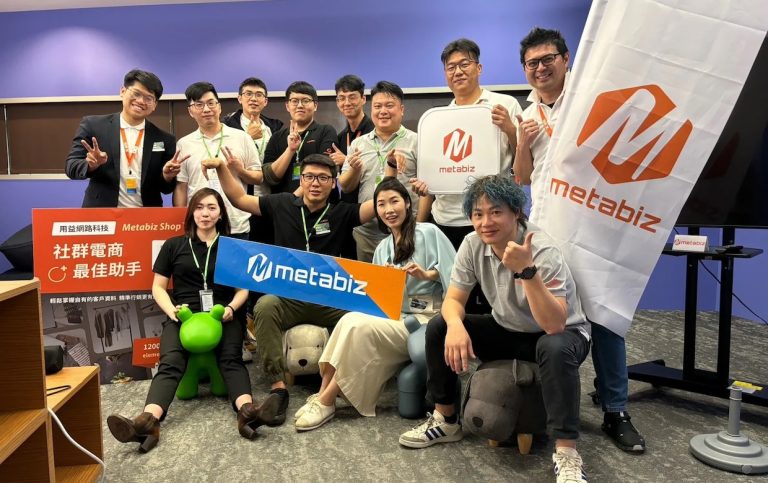



When Ekei Labs launched its project in 2019, the initial goal was to sell NMN (Nicotinamide Mononucleotide) supplements. But founder Bilal Kharouni (pictured above) saw the potential for something with far greater social impact: solving a fundamental challenge in longevity research—the extraordinarily long time required to see results from interventions such as treatments and experiments.
After formally incorporating in 2022 and spending approximately two years in R&D, the company entered 2025 with immediate and significant market demand, building a multi-million dollar sales pipeline for its custom AI model development services.
Ekei Labs’ strength lies in its proprietary DNA methylation analysis technology platform. DNA methylation is a type of epigenetic modification (a marker on genes) that regulates gene expression, and changes in methylation patterns can be used to estimate biological age. The company possesses high-resolution, high-throughput data generation capabilities and uses this foundation to build custom AI models tailored to each client company’s needs. Currently, 90% of its business is B2B, serving major companies in the food, biotech, and pharmaceutical industries.
While maintaining headquarters and sales operations in Tokyo, the company’s R&D center is located at the Okinawa Institute of Science and Technology (OIST). Leveraging the geographic advantage of Okinawa as one of the world’s premier “Blue Zones” for longevity, OIST’s world-class research environment, and access to an international talent pool, Ekei Labs aims to lead global longevity research from Japan.
From Decades to Months: Compressing Longevity Research
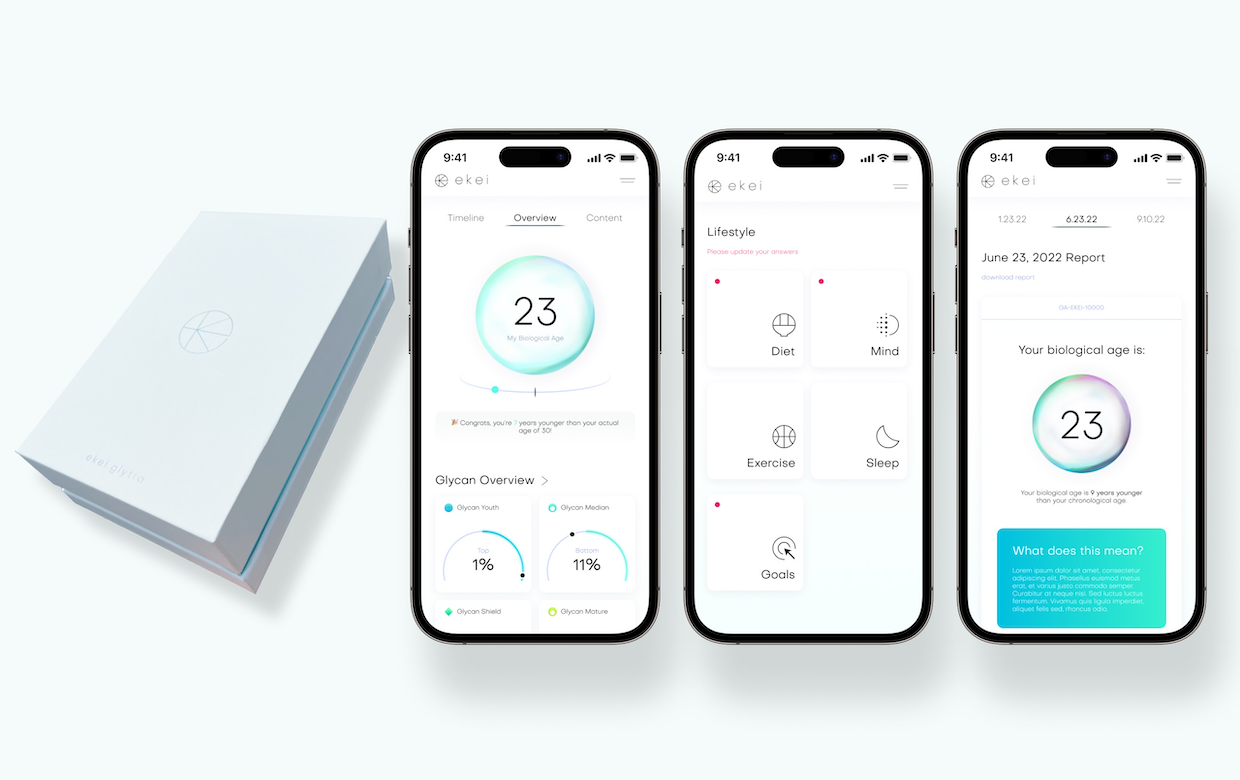
Image credit: Ekei Labs
Ekei Labs’ origins trace back to NMN research that gained attention around 2016. At the time, promising human studies on NMN were being published, and Kharouni and his team explored the possibility of commercializing this research. NMN is a precursor to NAD+, a crucial coenzyme in cells, and was expected to have anti-aging effects by restoring NAD+ levels that decline with age. The market was growing rapidly, with numerous companies launching to sell NAD+ boosters like NMN and NR.
However, between 2018 and 2019, Kharouni began questioning the supplement sales business model. He faced a fundamental question: Could this truly deliver meaningful impact on longevity research as a whole? Longevity research faces unique difficulties that other medical research fields don’t encounter.
If you look at cancer research, for example, the time from intervention to result is much shorter and you can get results with a much higher probability. But with longevity research, it literally takes decades from intervention to result because you need a very long time to know if someone is going to live longer. We wanted to model aging and find ways to shorten the biological response time, which would actually drive longevity R&D. (Kharouni)
For instance, confirming whether a compound extends healthy lifespan by five years requires actually tracking subjects for more than five years. During this time, research teams wait in uncertainty while consuming enormous research budgets. If the intervention proves ineffective after five years, all that time and investment is lost. This structural problem has been the biggest bottleneck preventing progress in longevity research.
The solution Ekei Labs discovered was using biomarkers that measure the progression of aging, enabling short-term evaluation of intervention effects. Specifically, by analyzing DNA methylation—chemical modification patterns on genes—the technology estimates biological age. This technology enables evaluation of intervention effects within months, dramatically shortening the R&D cycle.
The issue we really wanted to target was how we could impact longevity R&D. So we decided to build a high-resolution, high-throughput DNA methylation analysis platform that could generate data for creating AI models. With this platform, we can create AI models that are highly specific to our clients’ needs, which is something that’s impossible to achieve using the noisy, generic public datasets. (Kharouni)
With this technology, whether a food ingredient or compound truly affects aging can be evaluated in months. But the real breakthrough isn’t just speed—it’s precision. The industry increasingly recognizes that measuring aging requires tools sophisticated enough to detect whether cells are actually getting younger, not just changing.
Companies like NewLimit, which recently raised $65 million US from Eli Lilly for epigenetic reprogramming work, emphasize this need for high-resolution measurement. Ekei Labs’ platform addresses exactly this challenge: research processes that traditionally took years are shortened to months, with the resolution to detect subtle but meaningful biological changes. This represents game-changing technology for longevity research.
Supporting this strategic pivot was the rapid expansion of the longevity research market. Deloitte reported that the overall longevity market in 2023 was approximately $65 billion US and is projected to reach $314 billion US by 2030—an astounding annual growth rate of 25.2%. Venture capital investment has also surged, with record investments of $7.65 billion US in 2021 and $6.94 billion US in 2022.
Tech giants and billionaires are also pouring massive funds into longevity research, including Google-backed Calico Labs and Jeff Bezos-backed Altos Labs. Yet this growing market simultaneously faces a major challenge: the lack of reliable measurement methods. Many research projects have been delayed due to the absence of appropriate methods for evaluating efficacy, leaving investors without confidence. Ekei Labs’ platform emerged to fill precisely this gap.
This strategic transformation, following the 2022 incorporation and approximately two years of R&D, bore fruit. Launching as a B2B platform in earnest in 2025, the company experienced immediate and significant market pull, rapidly building a project pipeline that exceeded all initial projections.
Decoding True Age: Custom AI Models Read Your DNA
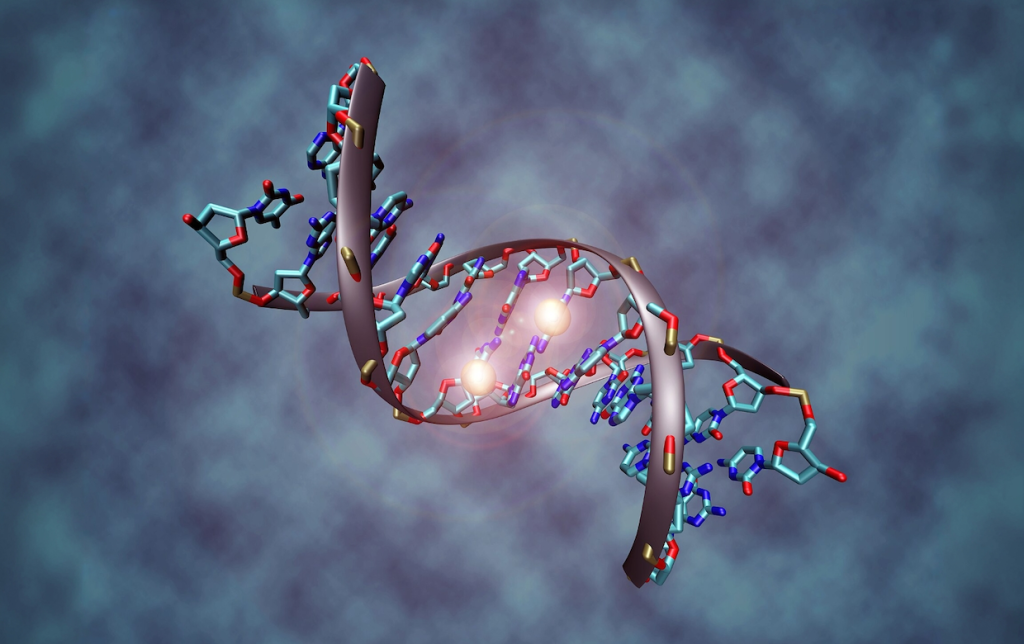
Image credit: Christoph Bock, Max Planck Institute for Informatics
CC BY-SA 3.0
The core technology of Ekei Labs is DNA methylation analysis. To understand DNA methylation, one must first grasp how genes work. Our bodies create completely different tissues—heart, liver, brain—from cells containing identical DNA. This occurs because different genes are switched on and off in each cell type. One mechanism controlling these switches is DNA methylation, an epigenetic modification.
DNA methylation is the addition of a methyl group (-CH3)—a chemical marker—to specific sites on DNA. When methyl groups are added, gene expression at those sites tends to be suppressed. Crucially, as we age, these methylation patterns change systematically. Methylation increases at some sites while decreasing at others. These change patterns are highly regular and common across individuals, transcending individual differences.
The “epigenetic clock” (or biological age clock) was born from applying this discovery. The most famous is the one developed in 2013 by Steve Horvath at the University of California, Los Angeles (UCLA). Horvath’s clock can estimate age in virtually all tissues and cells by analyzing approximately 350 DNA methylation sites. Its accuracy is remarkable, with an error margin of just 3.6 years.
Subsequently, various types of epigenetic clocks have been developed, including Hannum’s blood-specific clock, PhenoAge focused on health span, and GrimAge for predicting mortality risk. Research shows that people whose epigenetic age is five years older than their chronological age have a 16% higher mortality risk compared to those whose ages match. Accelerated epigenetic aging also correlates with increased risk of age-related diseases including cancer, cardiovascular disease, and Alzheimer’s disease.
Ekei Labs’ strength lies in performing this analysis with “high resolution and high throughput.” “High resolution” means reading DNA methylation patterns in great detail. “High throughput” means rapidly processing large volumes of samples. The ability to analyze dozens to hundreds of samples simultaneously enables statistically reliable results in short timeframes.
Many research institutions and companies face limitations in sample processing capacity. Small sample sizes lack statistical certainty, yet processing large sample volumes requires excessive time and cost. Ekei Labs’ platform resolves this dilemma.
However, data generation capability represents only half of Ekei Labs’ value. The other half is the ability to build AI models optimized for each client company’s R&D challenges from that data.
What’s unique about us is that in addition to having our own proprietary methods and platform for generating data, we have very talented people who can create truly customized, dedicated AI models to answer our clients’ questions. (Kharouni)
For example, when a pharmaceutical company wants to evaluate the anti-aging effects of a specific compound, Ekei Labs develops an AI model specialized for that compound’s mechanism of action and targeted biological pathways. While general-purpose epigenetic clocks can measure overall aging, they struggle to precisely capture which biological processes a specific intervention is affecting.
Does a compound primarily act on inflammatory pathways? Does it suppress cellular senescence? Does it improve mitochondrial function? Such detailed information is crucial in drug development. Custom AI models dramatically increase this precision. When a food company wants to verify the anti-aging effects of a new functional ingredient, they would traditionally need to conduct clinical trials over several years. But using Ekei Labs’ technology, they can analyze hundreds of samples within months and evaluate how the ingredient affects epigenetic age.
The evolution of machine learning and AI technology also supports Ekei Labs’ business model. Traditional epigenetic clocks primarily used relatively simple statistical methods like linear regression. However, in recent years, more sophisticated machine learning methods such as deep learning and random forests have been introduced, significantly improving prediction accuracy.
Initially, Ekei Labs adopted a B2C model selling blood test kits to general consumers. However, Kharouni decided to pivot to B2B seeking greater impact. While consumer biological age measurement services certainly have market potential, accelerating pharmaceutical and biotech company R&D brings more anti-aging therapies to market. This ultimately extends the healthy lifespan of hundreds of millions of people. Concentrating limited resources in the area with the highest potential impact—this decision supports Ekei Labs’ rapid growth.
Demand Exceeds Supply: A Breakout First Year
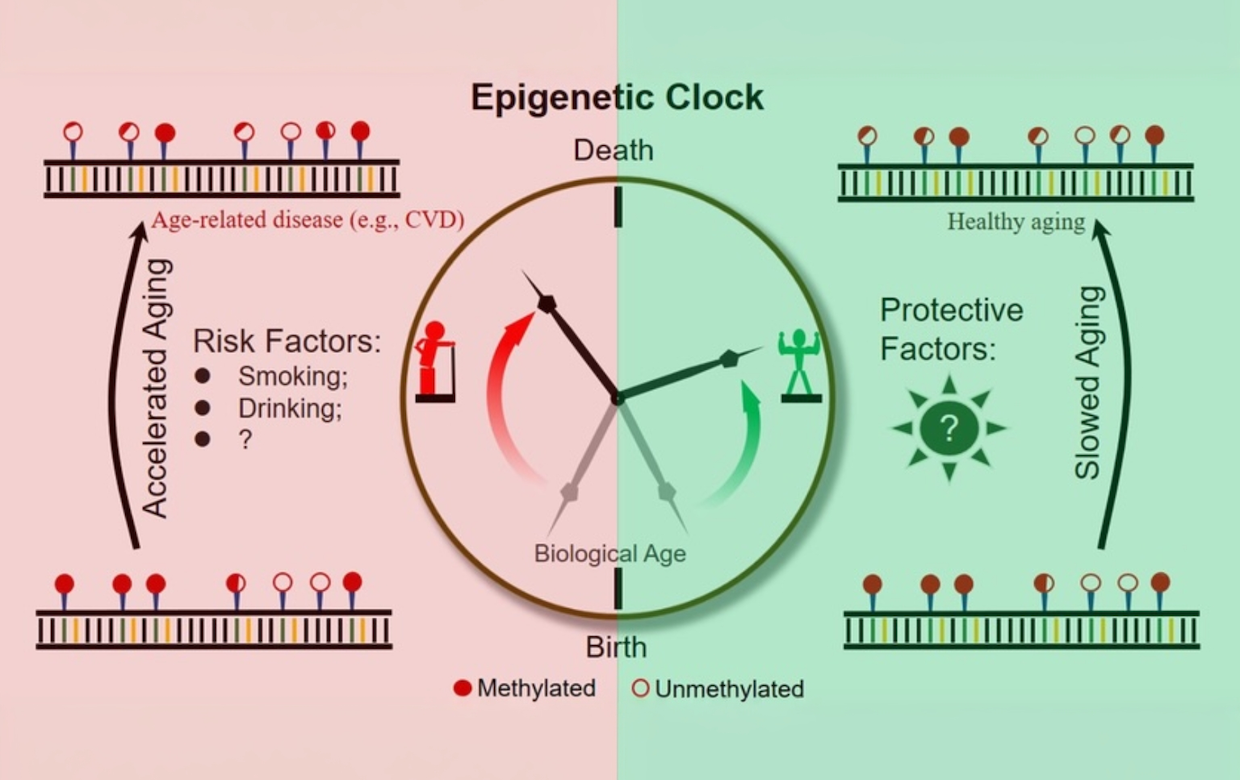
(From a paper by Fuhuii Xiao, Hao-Tian Wang, and Qing-Peng Kong)
For fiscal 2025, their first year of commercialization, Kharouni confidently states they are securing contracts with several Tier-1 companies. For a Japanese biotech startup, this is a remarkable achievement. While many bioventures spend their first year seeking a single major customer, Ekei Labs is already partnering with established industry leaders.
We launched the platform this year and our project pipeline was full for the next six months almost immediately. The fact that the market is pulling our solution this strongly is proof that we’re solving the right problem. (Kharouni)
This success stems not just from technical excellence but from timing and market fit. Longevity research has become a growth sector attracting investor and corporate attention in recent years. With global aging trends, demand for treating and preventing age-related diseases is exploding. According to Allied Market Research, the anti-aging and longevity therapeutics market is projected to reach $44.2 billion US by 2030, up from $25.1 billion US in 2020.
Currently, Ekei Labs’ main customers are companies in the food, biotech, and pharmaceutical industries. While initially considering expansion into insurance, they’re now focused on R&D-intensive sectors. In the food industry, Ekei Labs’ technology is used to verify the efficacy of functional foods and anti-aging ingredients. In biotech and pharma, it’s used more directly to support development of novel compounds and therapies.
In the drug development process, confirming whether candidate compounds actually act on aging-related biological pathways is crucial. Traditional methods relied on animal experiments and long-term clinical trials, but Ekei Labs’ technology enables rapid screening at early stages. This allows early identification of promising candidate compounds and efficient allocation of development resources.
The need for such high-resolution measurement tools—exemplified by companies like NewLimit seeking to detect cellular rejuvenation at the molecular level—is driving demand across the industry for platforms like Ekei Labs’.
Kharouni cites Cambridge, UK-based Shift Bioscience as a success story using epigenetic clocks. Though Shift Bioscience is not an Ekei Labs client, he says it exemplifies the broader industry’s potential for what these measurement tools can achieve.
Shift Bioscience used existing epigenetic clocks to drive their R&D and found a potential single-gene therapy with significant effects at safe doses. This is a great example of a company successfully conducting R&D using these measurement tools.
What we want to do at Ekei Labs is really create the next generation of clocks—ones that are much higher resolution and more specific to our clients’ therapies. And we hope to support further breakthroughs in this industry. (Kharouni)
Next-generation epigenetic clocks won’t just measure aging but will have the ability to predict responses to specific interventions and therapies. For instance, they could predict with high precision how a compound affects aging in specific tissues or organs. This represents potentially game-changing technology for the drug development process.
Currently, the company is in partnership discussions with multiple major corporations, with contracts already progressing at a pace exceeding first-year revenue projections.
We’re in communication with many tier-1 companies about partnerships and really want to accelerate things. We’re already exceeding our initial business targets. So the question isn’t really whether we can sell, but how quickly we can scale. (Kharouni)
This statement reveals that product-market fit (PMF) has been established, with the next challenge being the speed of market development. Technical challenges are largely resolved, and customer inquiries are abundant. The question now is how quickly the organization can expand to meet demand.
To support this rapid growth, the company is currently raising a seed round. The funds will primarily go toward expanding the sales team. Securing sales talent who understand the pharmaceutical and biotech industries and can grasp technical content is particularly important.
Blue Zone Advantage: Okinawa as Longevity Lab

Photo Credit: OIST
While Ekei Labs maintains headquarters and sales functions in Tokyo, Japan’s capital and largest metropolitan area, its R&D center is located at the Okinawa Institute of Science and Technology (OIST) Innovation facility. The company has a dedicated lab at OIST and is conducting collaborative research with multiple laboratories. This dual-location strategy is one source of Ekei Labs’ competitive advantage.
We’re actually in a very unique position. We have our headquarters and sales in Tokyo, but all of our R&D is done at the OIST Innovation incubator. We have a lab at OIST Innovation and collaborate with some of the labs and faculty at OIST. We’re very happy with this partnership and proud to be part of the OIST ecosystem. We truly believe OIST can become a life sciences hub. (Kharouni)
OIST is recognized as a world-class research university. This graduate university, established in 2011, has characteristics markedly different from traditional Japanese universities. Most notably, it has no undergraduate program and promotes an organizational structure for interdisciplinary research. Researchers from various fields—physics, chemistry, neuroscience, marine science, mathematics—work in organizations called “units,” but departmental walls are low and cross-disciplinary collaboration is encouraged.
More than half of faculty and students are international, with all education and research conducted in English. This global environment attracts excellent international talent. In 2019, OIST ranked first in Japan and ninth globally in the Nature Index. This means OIST receives world-class recognition as a research institution publishing high-quality scientific papers. With researchers from over 50 countries and backed by cutting-edge research facilities and abundant research funding, world-level research is conducted there.
For Ekei Labs, partnership with OIST brings major benefits for both technology development and network building. DNA methylation analysis requires expensive sequencers and analytical equipment. Purchasing and maintaining all of these in-house would cost enormous sums, but using OIST’s facilities solves this problem.
Even more important is collaboration with world-class researchers. OIST’s faculty and researchers are leaders in their respective fields. By conducting joint research with them, Ekei Labs can incorporate the latest scientific knowledge into its business. Such intellectual networks greatly accelerate startup technology development.
Okinawa is known as one of the world’s “Blue Zones”—regions with the longest average lifespans. Blue Zones are areas with remarkably high proportions of centenarians. There are five Blue Zones worldwide: Sardinia, Italy; Ikaria, Greece; Nicoya Peninsula, Costa Rica; Loma Linda, California; and Okinawa, Japan. Okinawa’s people have enjoyed high healthy life expectancy through traditional diet, moderate exercise, and strong community connections.
This geographic and cultural characteristic holds value beyond mere coincidence for Ekei Labs’ longevity research. Kharouni explains:
OIST students are very talented, and want to stay in Okinawa to work. There’s a natural talent bridge there. But OIST being in Okinawa is a huge advantage in another way too. Okinawa is one of the Blue Zones where some of the longest-living people in the world reside. Many researchers around the world want to work with us on aging research in Okinawa. That’s definitely a powerful recruiting point. (Kharouni)
Indeed, the company’s Chief Scientific Officer, Lalhaba Oinam, chose to relocate with his family from Tokyo to Okinawa to work at OIST. The synergy between the longevity research theme and Okinawa as a location provides competitive advantage in acquiring excellent researchers. The symbolism of conducting research to uncover longevity secrets in a region where many long-lived people actually reside is attractive to researchers.
OIST invites over 1,000 researchers from around the world annually, hosting workshops and conferences. Through these events, Ekei Labs can build networks with the global longevity research community. They can receive introductions to client companies, find collaborative research opportunities, and stay current on the latest research trends.
Partnership with OIST also enhances Ekei Labs’ brand value. OIST is a highly regarded research institution globally, and its name is recognized in the global scientific community. The fact of “conducting collaborative research with OIST” increases Ekei Labs’ technical credibility and persuasiveness to potential client companies and investors.
Shibuya’s First: A Pioneer’s Lessons
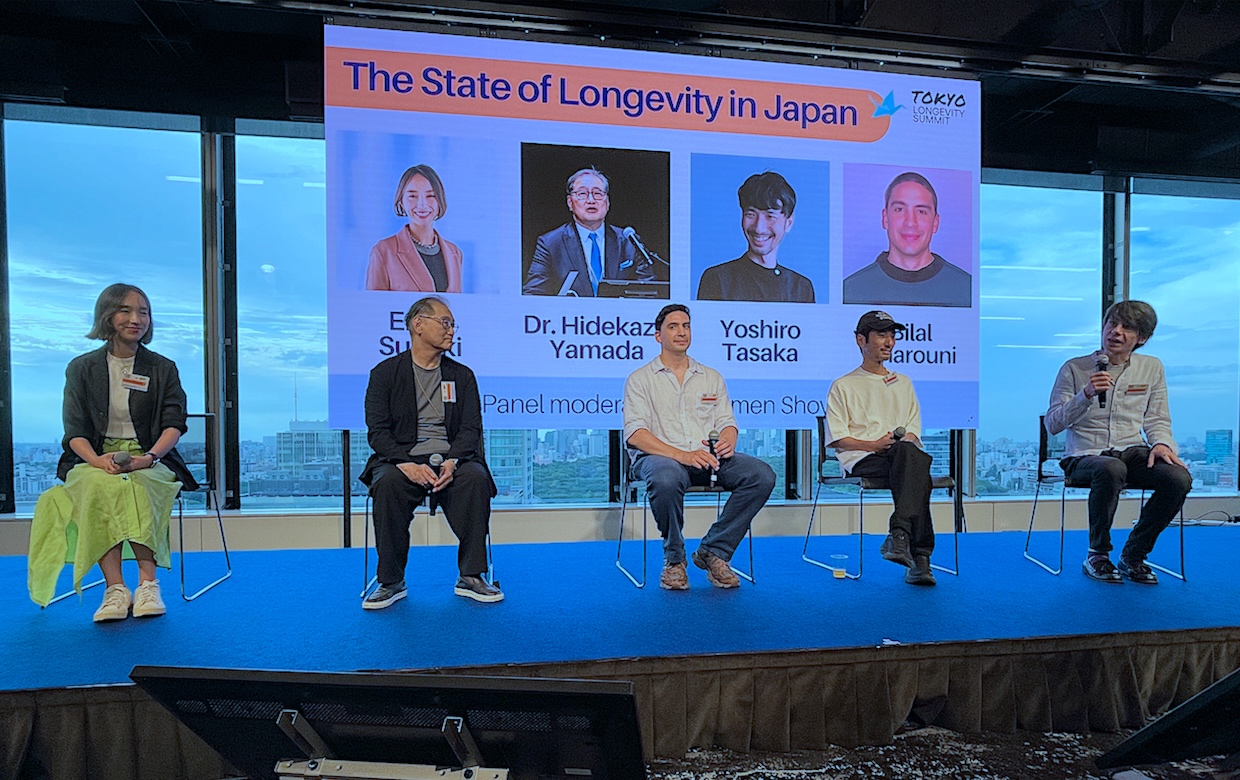
Photo by Masaru Ikeda
Kharouni’s connection with Shibuya City—one of Tokyo’s 23 special wards known as a hub for technology startups and youth culture—runs deep. Since first living in Japan in 2013, he has always resided near Shibuya. Captivated from the start by the neighborhood’s vitality and creative energy, basing himself there was a natural choice. When establishing Ekei Labs in 2022, Kharouni became the first company to receive support from Shibuya City’s startup support initiative Shibuya Startup Support (SSS).
I actually got to watch the birth of Shibuya City’s startup support program. I was actually the first founder to be sponsored by Shibuya City. So I’m kind of a pioneer of this program. All my friends, all my life, were within a 10-minute bike ride from Shibuya. So for me, living and working there was always natural. (Kharouni)
Shibuya City’s Shibuya Startup Support is a comprehensive startup support initiative that began in 2020. Rather than a single program, it functions as a brand name integrating multiple efforts including entrepreneur support, internationalization promotion, and proof-of-concept support. Additionally, the public-private partnership consortium Shibuya Startup Deck was established in November 2020, providing multifaceted support including real estate, finance, and global expansion (the consortium was subsequently integrated as the Shibuya Innovation Institute).
They have a great team, great projects, and their support has really been essential to our success. So I would definitely recommend any entrepreneur to reach out to them and collaborate. (Kharouni)
This statement shows that local government support holds value beyond mere funding for startups. Shibuya City’s support is multifaceted, including meetings with potential customers at business matching events, mentorship, access to office space, and administrative procedure support.
Networking opportunities are particularly important. By participating in Shibuya City’s initiatives, Ekei Labs connected with various stakeholders including other startups, investors, and corporate new business managers. Such connections are crucial for growing a business. Customer referrals, discovery of collaboration partners, fundraising opportunities—many chances arise from networks.
Beyond Measurement: Exit Plans and Future Vision

The evolution of artificial intelligence and machine learning technology has contributed significantly to longevity business development. Particularly, technology called epigenetic clocks (biological age clocks) is already entering practical application. Kharouni explains the importance of this technology and its future development:
To guide longevity R&D, you need reliable measurement methods. (Kharouni)
Current epigenetic clocks still have room for improvement. First-generation clocks focused mainly on estimating chronological age. Second-generation clocks emphasize predicting mortality risk and health span. And now, third-generation clocks are being developed. These are higher resolution and more specific to particular interventions and therapies.
What Ekei Labs aims for is this “next generation” of epigenetic clocks. Next-generation clocks won’t just measure aging but will have the ability to predict responses to specific interventions and therapies. They’ll also account for individual differences, enabling personalized predictions. This could further streamline drug development processes and bring more anti-aging therapies to market.
AI technology application demonstrates power at multiple stages of longevity research. First, in early-stage drug discovery, AI identifies promising candidates from enormous compound libraries. Traditionally, researchers selected candidate compounds based on experience and intuition, but with AI, millions of compounds can be rapidly screened.
Next, at the preclinical testing stage, epigenetic clocks evaluate compound efficacy. Then, at the clinical trial stage, AI identifies patient subgroups and predicts which patients will respond best to treatment.
Asked about future exit strategies, Kharouni answered that he envisions multiple options. One is being acquired by a genomic analysis company after successfully completing secretive R&D and obtaining patents.
DNA methylation analysis technology is applicable not just in longevity research but across various fields. For example, early cancer detection, genetic mutation detection, forensic age estimation—a wide range of applications. For genomic analysis companies, Ekei Labs’ technology and data represent attractive assets for expanding their service portfolios.
Another option is advancing into therapy development. They could investigate therapeutics and go public to develop those therapeutics. Currently, Ekei Labs occupies a position as a measurement and evaluation platform, but applying that technology, they could also develop therapies that actually slow aging.
Like all entrepreneurs, I have many dreams and many visions for how the company will progress. But right now I’m really focused on the next 12 months—solidifying the company, acquiring more clients, and completing our R&D pipeline. (Kharouni)
This statement shows Kharouni’s solid stance as an entrepreneur. While holding a long-term vision, he prioritizes executing on the immediate business. First, establish position as a B2B platform and expand the customer base. Then, continuously enrich the R&D pipeline to maintain technical advantage.
The longevity business ecosystem is expanding significantly through the convergence of AI and epigenetic technology. Not just pharmaceutical companies but food, cosmetics, wellness, and even insurance industries are increasingly interested in technologies that control or measure aging. Market size projections vary, but it’s expected to reach hundreds of billions of dollars by 2030.
While based in Japan, Ekei Labs clearly targets the global market. Aging is progressing rapidly not just in developed nations but in emerging countries including China, India, and Southeast Asia. In these countries too, demand for technologies extending healthy lifespan is rising. Ekei Labs seeks to establish a unique position in this market by combining Japanese technological capability with a global perspective.
Achieving a full project pipeline and a multi-million dollar sales pipeline so early represents an impressive start for a Japanese biotech startup. Yet Kharouni’s gaze is already set beyond. Solidify the business foundation over the next 12 months and accelerate further growth. Armed with revolutionary technology that visualizes genetic aging, Ekei Labs is taking on the grand mission of extending human healthy lifespan.



 Growthstock Pulse