

The seeds of anime scattered across the world have blossomed into a magnificent cultural phenomenon uniquely Japan’s own, captivating audiences globally. Yet behind this glamorous facade lies a production ecosystem wrestling with harsh working conditions and rapid technological disruption. The explosive growth of AI image generation technology has brought the anime industry to an unprecedented crossroads, creating both challenges and extraordinary new possibilities.
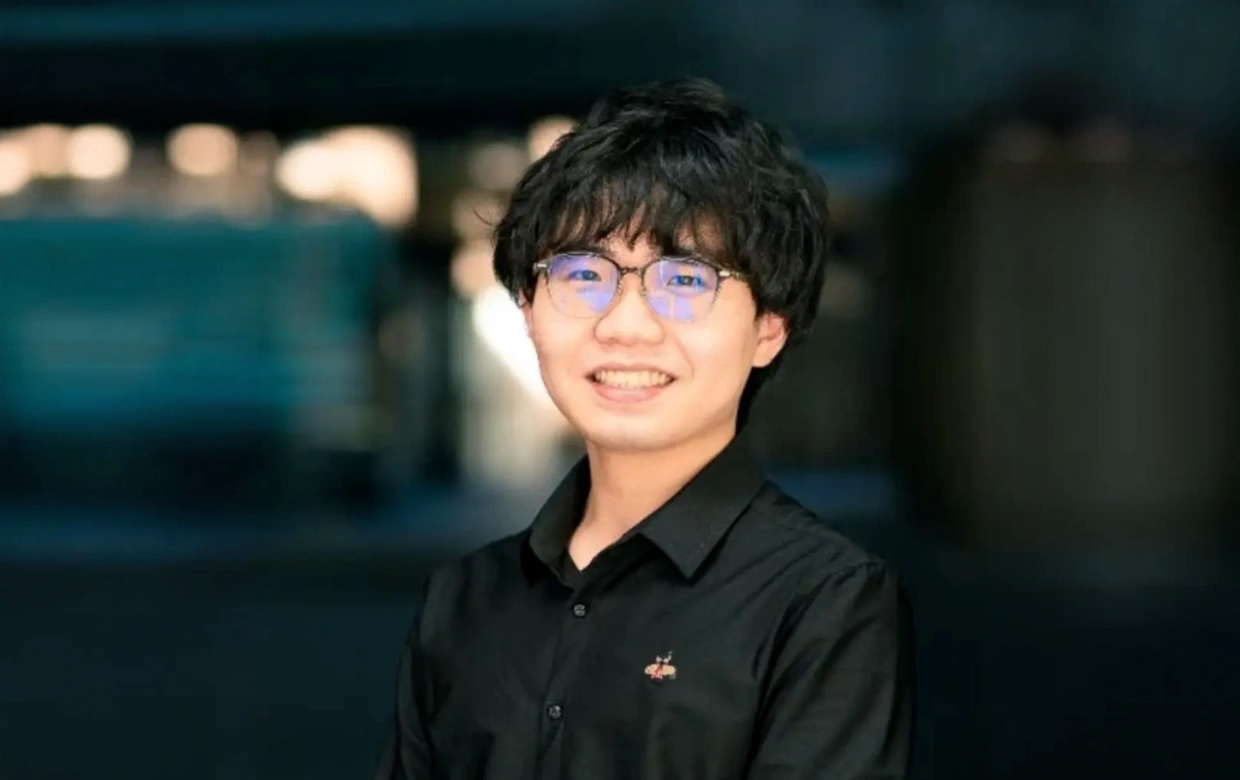
In this turbulent era, one startup is charting a distinctive course toward industry transformation. AI Mage, founded in 2024, develops AI solutions to revolutionize data management in anime production environments. The company’s CEO, Xin Zhang (pictured above), brings an extraordinary background—he came to Japan from China at 14 to pursue professional shogi (Japanese chess), witnessed AI’s victory over the shogi Meijin in 2017, then pivoted to become an AI researcher himself.
Zhang’s story embodies the complex relationship between humans and artificial intelligence. Having raised 13 million yen (approximately $87,000 US) in angel funding in December 2024, followed by 170 million yen (approximately $1.1 million US) in seed funding from Genesia Ventures, Plug and Play Japan, and Headline Japan in 2025, AI Mage presents a compelling vision: using AI not to replace human creativity, but to amplify it by solving the industry’s most persistent bottlenecks.
The Unlikely Journey from Shogi Prodigy to Tech Entrepreneur
Zhang’s path began with a chance encounter in a Shanghai elementary school classroom. During a lesson about Japanese culture, seven-year-old Zhang was immediately captivated by shogi’s wooden pieces inscribed with distinctive kanji characters. Unlike xiangqi (Chinese chess) or Western chess, Japanese shogi felt culturally familiar yet intriguingly different.
When I entered elementary school in Shanghai, there happened to be a lecture about Japanese culture that included shogi. Among various games like xiangqi and chess, Japanese shogi was distinctive with its unique shape and kanji characters, so I became interested because it felt close to Chinese culture—that was my encounter with shogi. (Zhang)
What began as childhood curiosity evolved into passionate dedication. For seven years, Zhang dominated Shanghai’s shogi tournaments, but China’s lack of a professional system left his future uncertain. Everything changed when his teacher’s connections with Japanese professionals opened an unexpected door. Zhang passed the shoreikai (Japan Shogi Association’s professional training academy) entrance exam in August 2010. Just before the Great East Japan Earthquake on March 11, 2011, 14-year-old Zhang came to Japan as the first overseas resident to join the academy.
The reality proved brutally humbling.
After coming to Japan, I painfully realized how demanding shogi was. I had been strong in China, but I was completely useless in Japan. There was a language barrier, and the level of shogi was far higher than I had imagined. Even so, I didn’t give up and kept going. (Zhang)
Until 2017, Zhang pursued his professional dream through the academy while grappling with language barriers and cultural adaptation. The experience forged his resilience and worldview, preparing him for an even more dramatic pivot ahead.
Then came 2017—the year AI achieved victory over the Meijin, Japan’s top shogi player. For Zhang, this wasn’t just industry news; it was an existential crisis that would redirect his entire life trajectory.
I was really shocked. Even though I had been strong at shogi in China, I was completely useless after coming to Japan. But what shocked me even more was when shogi AI achieved victory over the Meijin in 2017. As someone who had dedicated his life to shogi, seeing it lose to AI… I had come to Japan solely to pursue shogi, so I started wondering what would happen from here. (Zhang)
At 20, Zhang made a pivotal decision: if he couldn’t beat AI, he would understand it. Adopting a “know your enemy” mentality, he researched AI programs and discovered Professor Yutaka Matsuo’s lab at the University of Tokyo was Japan’s premier AI research center. He joined in 2019, launching his second chapter as an AI researcher.
From Academic Research to Industry Innovation

Image credit: AI Mage
Zhang’s transition from professional gaming to academic research revealed unexpected synergies. Shogi had taught him pattern recognition, strategic thinking, and the crucial ability to see multiple perspectives simultaneously—skills that translated perfectly to AI research.
At the Matsuo Lab, Zhang immersed himself in machine learning and computer vision, developing particular expertise in image generation technology. When breakthrough AI image generators emerged in late 2022, he immediately grasped their transformative potential and knew he needed to choose an application domain strategically.
The answer was obvious for someone building a business in Japan: anime.
Japan’s distinctive strength is anime. I was curious about what the production environment was like, so even though I was still a student, I sent emails to dozens of studios requesting meetings and visited them. (Zhang)
What followed was an intensive field research campaign that fundamentally shaped AI Mage’s approach. Zhang visited over 30 studios, from industry giants to small independent operations, conducting detailed interviews with directors, producers, animators, and business development managers.
Everyone was incredibly generous with their time, and what I learned completely changed my understanding of the industry,” Zhang recalls. “At production sites, truly excellent creators work with passion, but I also saw many structural challenges. The need for more efficient data management, search functions, and supervision work was particularly severe. (Zhang)
This field research revealed that uncontrolled AI advancement could negatively impact the industry. However, if creators could skillfully utilize the technology, development similar to what happened in shogi was possible.
Looking at my shogi experience, while the Meijin lost to AI in 2017, considering it now, the Meijin has become stronger by utilizing AI. I think the anime industry will follow the same path. However, the first three years of AI adoption are incredibly difficult. It’s challenging for people in any position. We need to overcome this period together. (Zhang)
This parallel informs AI Mage’s “production-first” philosophy. Rather than imposing technology on creators, Zhang prioritizes understanding industry needs and developing solutions that amplify rather than replace human expertise.
From my personal experience, about 80% of international students love anime and came to Japan after learning about Japan through anime. Particularly among AI researchers studying at the University of Tokyo’s doctoral and master’s programs, many are anime fans. (Zhang)
Decoding Anime’s Hidden Complexity
Zhang’s research revealed anime’s unique business architecture, which differs fundamentally from other entertainment industries. According to Japan Animation Association data, 2024’s anime industry market reached 3.84 trillion yen (approximately $25.6 billion US, up 14.8% from the previous year), setting a new record. The overseas market reached 2.17 trillion yen (approximately $14.5 billion US, up 26.0%), significantly exceeding the domestic market of 1.67 trillion yen (approximately $11.1 billion US), highlighting the growing importance of global expansion.
In anime, merchandising, game adaptations, and licensing goods are major revenue sources. This is the industry’s distinctive characteristic. (Zhang)
This business using non-existent characters is a major feature of the anime industry, but simultaneously creates challenges. Story worlds and character personalities don’t exist in reality, requiring specialized knowledge to understand. Moreover, anime fans’ attachment to characters runs extremely deep, and even slight deviations from established settings can provoke strong backlash.
For example, when using popular characters for collaboration, if they’re depicted with expressions or settings inconsistent with their personality or worldview, it can provoke strong backlash from fans. Additionally, some works prioritize maintaining a neutral stance for global distribution, so using them in military scenes or political contexts can become problematic. Understanding these work-specific characteristics is necessary to make the business function. (Zhang)
The supervision bottleneck extends far beyond simple visual accuracy. Reviewers must consider character positioning, contextual appropriateness, relationship dynamics, and countless subtle details. For instance, the specific expressions a character should show in certain situations, or even their positioning when with other characters, are often detailed requirements.
As a result, while numerous works have potential for worldwide expansion, they’re currently limited to specific regions using specific human resources. For IP at the forefront of trends, time and resources are invested in supervision even at high cost, but for other IP, resources cannot be allocated. (Zhang)
To solve this challenge, Zhang conceived creating “AI otaku.” If AI could replicate the deep work understanding that human otaku possess, it would enable not just supervision efficiency but also small-scale IP utilization previously impossible due to resource constraints.
Engineering “Otaku AI”: Beyond Visual Recognition
AI Mage’s core technology is AI capable of deeply understanding anime works. Zhang calls this “AI otaku.”
Ultimately, the key is whether you can understand the story and characters. Who can understand this? Otaku can. But otaku can’t be everywhere in the world doing supervision, so we want AI to serve as that substitute. (Zhang)
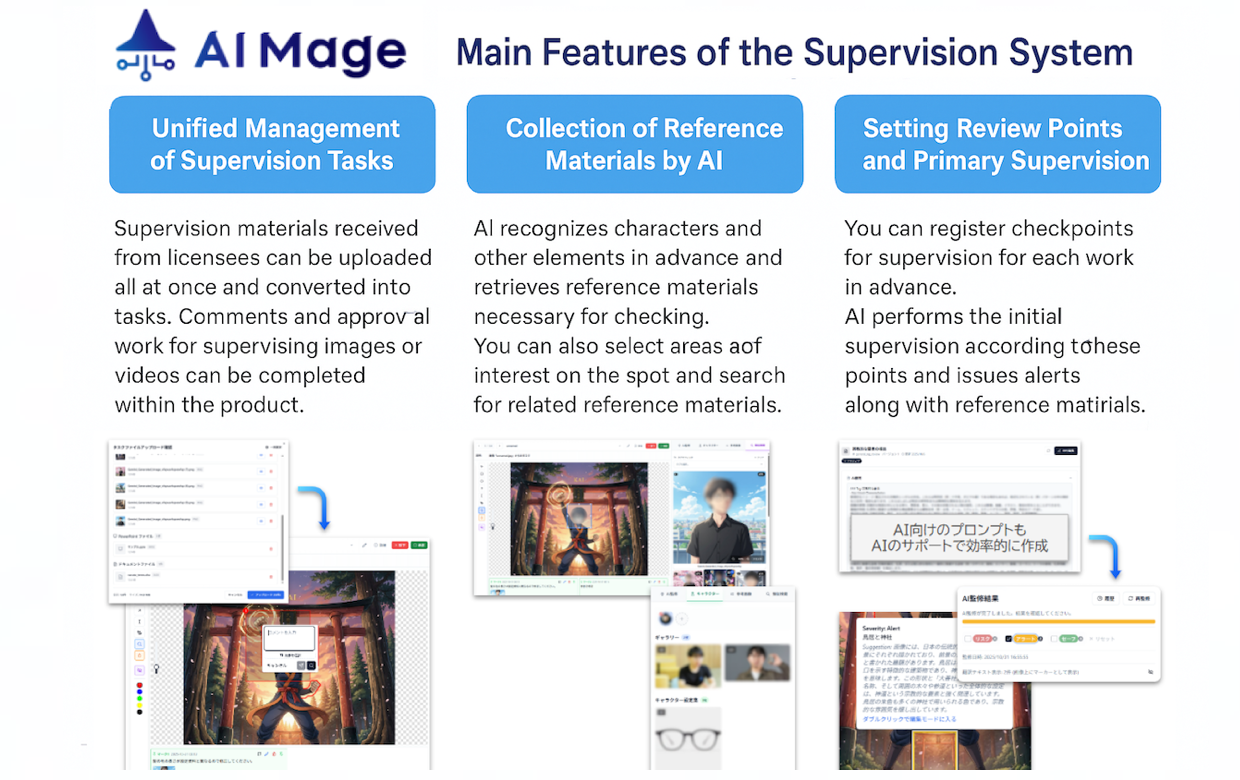
AI Mage’s solution provides practical functionality addressing specific challenges in anime production and utilization environments. Their video search function allows users to search original video content using natural language, similar to web search, and extract desired cuts.
For example, inputting “protagonist’s name” picks up only relevant scenes from lengthy works. This enables specific instructions like “Make merchandise with this character,” “Reference this expression,” or “This differs from this episode’s setting, please correct it.”
More advanced searches are also possible: “protagonist angry scenes,” “scenes with protagonist and specific character,” or “decisive face during battle”—searches including specific situations and emotions impossible with traditional metadata-based searches.
Currently, production sites must manually search for necessary scenes asking “Where was that scene?” through dozens of 20-minute episodes. The company aims to dramatically streamline this through technology. Found cuts can be shared via URL with stakeholders, and similar cuts can be searched by uploading images.
For supervision workflow unification, the system digitizes checking work traditionally done in PowerPoint. Slides, spreadsheets, and other supervision files submitted via email or shared folders from licensors are consolidated into the system and assigned to supervisors. Progress tracking for various submitted materials becomes centrally manageable.
During supervision work, when collaboration artwork is submitted, detailed checks verify whether character faces are visible, expressions are correct, and design details are appropriate. Additionally, overall illustration appropriateness is judged.
Global expansion requires particularly careful cultural consideration. For instance, designs evoking Japanese militarism may be rejected in China and Korea, while Middle Eastern markets require sensitivity to religious considerations regarding depictions of certain foods or behaviors.
Even when it’s not a strict rule violation, AI can learn from human supervision results and provide intuitive judgments like “This composition might give a slightly religious impression” or “Given this character’s traits, this expression in this scene feels off.” (Zhang)
According to Zhang, such intuitive judgments represent the “otaku-understandable” domain, and AI replicating this can dramatically streamline supervision work. Through continued learning, the system also acquires increasingly detailed judgment criteria.
Global Strategy and Business Innovation
AI Mage’s technological innovation reveals its true value in overseas expansion. Zhang strongly envisions future global expansion, particularly targeting the Chinese market. China is rapidly growing as an anime consumption market with high demand for Japanese anime IP (intellectual property). However, language barriers and cultural differences create obstacles to smooth licensing.
For example, when Chinese manufacturers want to collaborate with Japanese anime titles, they want to consult in Chinese: ‘Our customers are mostly young women in their twenties—which characters should we use and how for collaboration with this work?’ When otaku who understand the work are present, they keep making recommendations considering trends on local SNS and e-commerce platforms. We want to realize this through AI. (Zhang)
This vision encompasses multilingual AI finding anime works matching corporate target segments and proposing collaboration projects. AI aims to provide suggestions understanding cultural nuances and market characteristics beyond simple translation.
For instance, certain character popularity differs between China and Japan. Preferred characters and expressions also vary by product category. The vision involves AI learning these market-specific trends and proposing optimal matching.
For licensing and agency operations, the goal is enabling comprehensive one-stop platform processing from permit applications through contract supervision self-checks to promotional material creation. This would dramatically streamline traditionally complex, time-consuming international IP licensing.
AI Mage’s current revenue model centers on SaaS revenue from companies with supervision departments. In the near term, they provide value through supervision systems and search engines that improve operational efficiency. For future growth, they aim to expand into the licensing business to capture larger market opportunities.
The customer base spans multiple segments: rights companies conducting IP supervision, advertising agencies that purchased rights but can’t fully utilize them, and original IP holders—various players involved in anime IP.
Major advertising agencies purchase anime IP rights but sometimes cannot fully utilize them. Since they bought the rights, they need aggressive licensing expansion to avoid losses, but this requires supervision specialists, creating bottlenecks. (Zhang)
Given this situation, AI Mage aims to contribute to IP value maximization through supervision efficiency. AI power can revive “sleeping assets”—owned rights not being fully utilized.
One of the most critical elements in AI Mage’s technical development is “data quality.” Unlike general image recognition AI, understanding anime characters and worlds requires more than simple image data. Comprehensive datasets including character design documents, story backgrounds, and production intentions are essential.
Access to such official data is only possible through formal partnerships with IP holders. While overseas generative AI companies use anime data without permission, AI Mage obtains high-quality data through legitimate means by partnering with IP holders, enabling AI that truly understands works.
Technologically, we’re building multimodal AI systems. By integrating not just images but text, audio, and even creator intentions and background information for comprehensive learning, we’re trying to achieve true anime understanding. (Zhang)
The company’s approach goes beyond fine-tuning existing general-purpose AI models—they design architectures from scratch specifically tailored to the anime industry’s unique needs. This enables accurate judgment of subtle expression differences and context-dependent character emotions that general-purpose AI cannot capture.
The development process emphasizes close collaboration with production staff and supervision experts. Industry-specific customs and implicit understandings that technologists alone couldn’t recognize must be systematically incorporated.
For example, expressions certain characters show in specific situations have patterns recognized as ‘conventions’ among fans. By teaching AI these cultural codes, we can achieve fan-beloved judgments beyond mere technical accuracy. (Zhang)
Building the Team and Industry Transformation
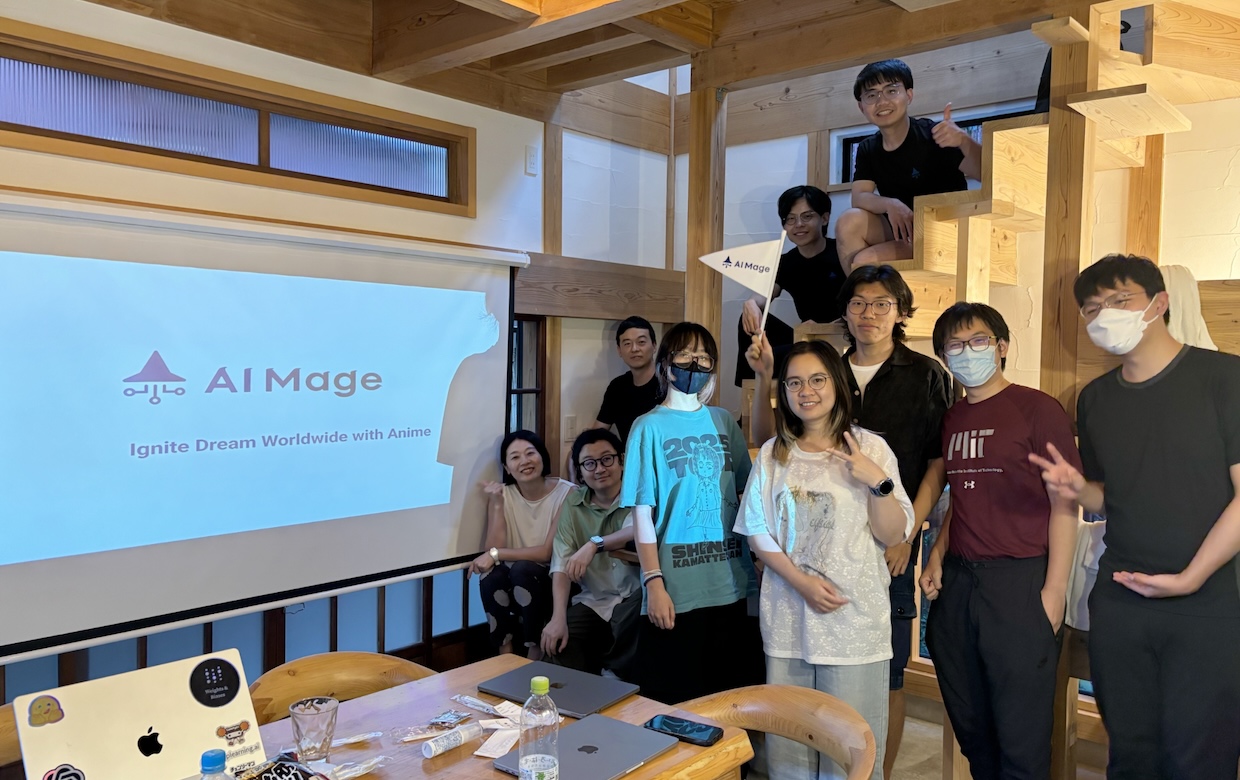
Photo credit: AI Mage
Zhang’s ultimate vision transcends simple supervision efficiency toward comprehensive anime industry transformation. He particularly emphasizes profit-sharing mechanisms for production sites.
To create AI that truly understands works requires two things: work data, and checking whether AI output is correct. Only people from production sites—like directors—can really do this. (Zhang)
Based on this recognition, AI Mage minimizes barriers for production sites adopting services. Site cooperation improves per-work AI understanding, and utilizing that AI supports IP holder business expansion. This cycle enables sites to access quality services affordably while the company’s business grows simultaneously.
This “production-first” approach strategically avoids the “technology-first” trap many tech companies fall into. Imposing technology without understanding anime industry complexity and culture likely results in industry rejection.
Production site personnel take real pride in their work. Tools that disregard their expertise would never be used. Therefore, we take the stance of maximally respecting on-site knowledge and amplifying it through technology. (Zhang)
This “production-first” approach holds important meaning in the context of international AI technology competition.
Meanwhile, overseas generative AI companies use anime data to create models and utilize them without permission. While legally problematic, they’re doing it anyway. Seeing this, I wondered why Japan can’t provide official alternatives—it seems wasteful.
In the future, as AI-generated anime-related images and videos are massively released, even single-image supervision is already challenging. If AI outputs one image per second, how do we supervise that?
Supervision work can’t keep up. Current systems absolutely cannot handle it. So we’re working on either having our AI perform that supervision or building systems that generate AI-supervised images and videos, with supervision system construction as our current focus. (Zhang)
AI Mage raised 13 million yen (approximately $87,000 US) in angel funding in December 2024. In 2025, the company completed a seed round of 170 million yen (approximately $1.1 million US) from Genesia Ventures, Plug and Play Japan, and Headline Japan. For organization building, they take a careful approach, prioritizing quality member selection over rapid expansion.
The organization has grown from solo founding to nearly 20 people including contractors and interns as of November 2025, with industry-leading specialists participating. The business development member is Zhang’s high school mentor, maintaining a long-term relationship.
On technical development, specialists who worked on cutting-edge AI development at Stability AI and DeepMind provide support as advisors. Exceptional talent normally difficult to acquire joins as full-time employees or cooperates as advisors due to shared passion for anime.
Currently, the company actively seeks two personnel types: senior product developers with approximately 10 years’ experience, and junior-level candidates who love anime and work with generative AI.
AI utilization in the anime industry involves not just technical challenges but legal and ethical issues. Intellectual property rights are particularly complex, with many areas inadequately covered by current legal frameworks.
Zhang seeks solutions through close industry dialogue. Rather than imposing technology, he emphasizes building win-win relationships while maximally respecting rights holders’ intentions.
The intellectual property rights framework is extremely complex. When trying to utilize work data in our system, it’s very difficult to understand from the outside where the line is between acceptable and unacceptable use. That’s why many situations where generative AI is utilized actually exist in gray zones. (Zhang)
AI Mage adopts a unique approach: building direct partnerships with IP holders and emphasizing obtaining formal approval for data usage methods before utilizing AI.
If IP holders build official AI themselves, they should gain advantages over overseas AI companies using anime data without permission. However, IP holders entering AI business requires establishing supervision systems as prerequisites. With proper supervision systems, new business possibilities could emerge. (Zhang)
Zhang suggests aiming to become a private-sector “anime version of JASRAC” (Japan’s music rights organization). This involves building ecosystems promoting content distribution through formal licensing, eliminating piracy and returning legitimate profits to IP holders.
Technologically as well, the focus is AI utilization that enhances original IP value rather than simple imitation. For instance, they envision developing technology creating new expressions while maintaining character “essence” rather than directly reproducing existing characters.
Many companies have already entered AI image generation. However, Zhang proposes clearly different value from general-purpose image generation AI.
General image generation AI can create ‘anime-like’ images, but whether those characters would truly be loved by fans is another matter. What we ultimately aim for is AI that understands character souls, not just visual reproduction. (Zhang)
This differentiation appears in technical approaches. While many competitors pursue quantitative expansion (more data, larger models), AI Mage emphasizes qualitative deepening (deeper understanding, more precise judgment).
Business model uniqueness also exists. While many AI companies focus on B2C (consumer) services, the company specializes in B2B (business), particularly anime industry structural problem-solving. This enables more sustainable, stable revenue foundation construction.
For overseas expansion as well, the company prioritizes localization understanding each country’s cultural characteristics rather than simple technology export. Plans involve learning China-specific anime culture and consumer preferences for the Chinese market, and collaborating with local content industries in Southeast Asian markets—adopting different approaches for each market.
Future Vision: Infrastructure for Creative Industries
Zhang speaks frankly about current challenges.
Recently, China, the US, and others are all entering anime and using AI, so if Japan just resists domestically, we’ll probably fall behind—I have a real sense of urgency about this. (Zhang)
This urgency accelerates the company’s global expansion strategy. They’re developing AI as foundational technology for competing globally while leveraging Japan’s anime IP strengths.
As medium-to-long-term prospects, Zhang aims for “AI Mage to become industry infrastructure.” Beyond single company success, he wants to lead anime industry digital transformation and help inherit anime culture—Japan’s soft power source—to future generations.
Ultimately, I want to build an ecosystem where creators worldwide create new value on AI Mage’s platform and fans gain richer entertainment experiences. Technology is a means; the goal is expanding human creativity and happiness. (Zhang)
This initiative has potential to become foundational technology for maintaining Japanese anime industry advantages in global competition. As AI technology democratizes, creating new business models fusing Japanese cultural value with technology is expected.
The young man who came to Japan at 14 dreaming of shogi mastery now envisions Japan’s entertainment industry future using AI as his weapon. Having learned from shogi AI defeat, he now supports the industry from the “defeated side” perspective—Zhang’s challenge may bring significant transformation to Japan’s anime industry. At the intersection of technology, culture, and business, new entertainment forms are emerging.
If his vision realizes, the anime industry could transcend mere content production to become a new cultural creation space where AI and creativity fuse. At the center of this transformation lies the deep love for Japan and technological passion of one Chinese entrepreneur who experienced shogi setbacks.


 Growthstock Pulse